
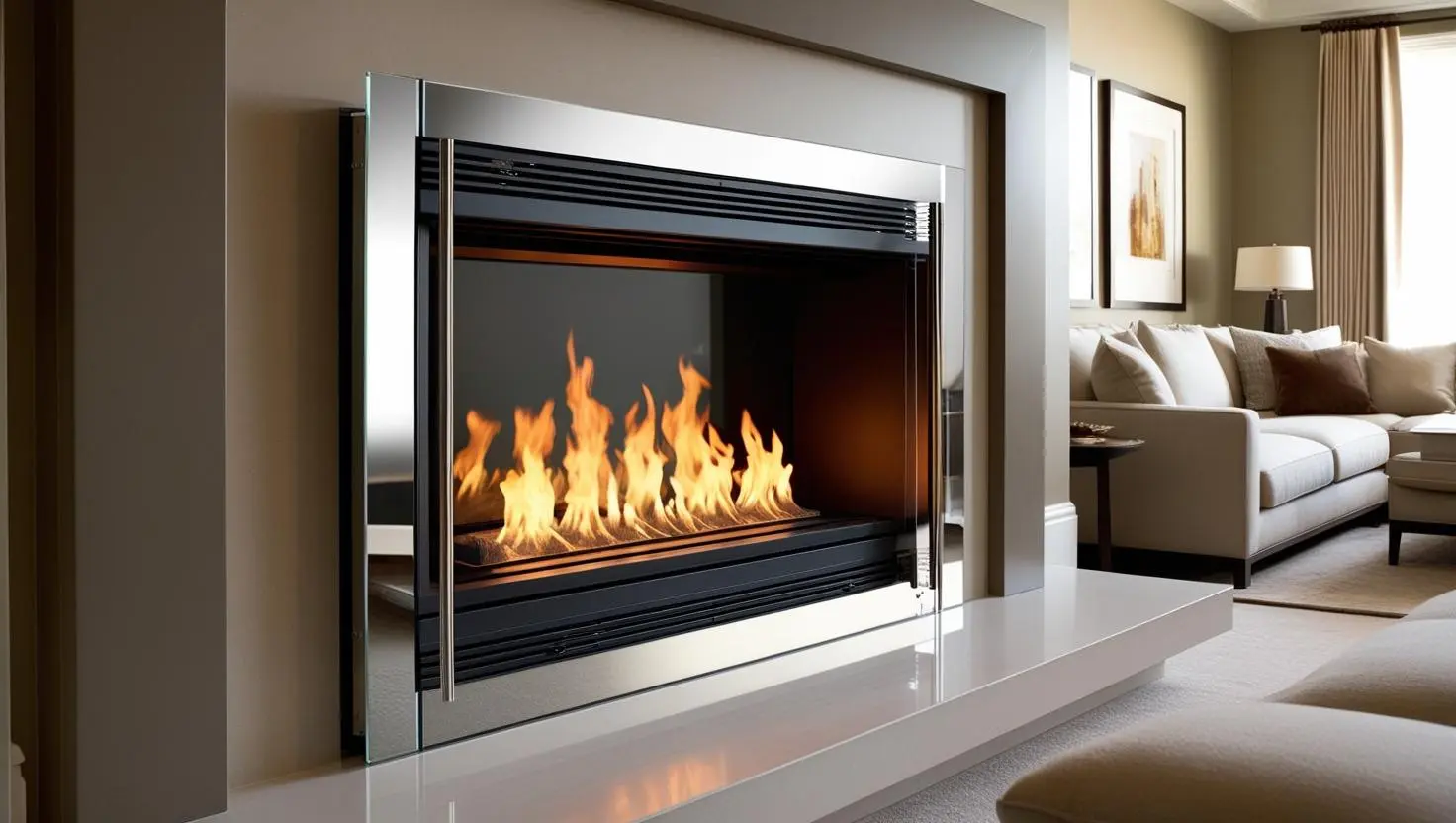
Learning to install glass doors on a fireplace is worth an afternoon. Glass doors make an open fireplace safer, cleaner and a lot more efficient. They stop sparks and rolling logs, keep pets and kids away from the flames, and when the fire is out they close off the chimney so warm room air doesn’t drift up the flue all night. The good news: on most masonry fireplaces you can install glass doors yourself with basic tools.
This guide walks you through how to install glass doors on a fireplace, from measuring the opening to the first test fire. We’ll also cover the cases where it makes sense to call a fireplace glass professional instead.
Before you start: check what kind of fireplace you have
The steps below are for a traditional masonry fireplace, the brick or stone kind with a firebox built on site. If you have a prefabricated (zero-clearance) fireplace, a metal box set into a framed wall, only install doors that the fireplace manufacturer lists for that exact model. The wrong door can trap heat against the metal and void the safety listing. Gas fireplaces and inserts usually come with their own sealed glass front, which you replace through the manufacturer rather than with an aftermarket door.
Tools and materials
- Tape measure and a notepad
- Level
- Screwdriver or drill with the bits listed in your door kit
- Masonry bit and anchors, only if your kit fastens to the brick
- Work gloves and safety glasses
- A shop vac or brush for cleaning the opening
- The fiberglass insulation strip that comes with most door kits
Step 1: Let the fireplace go completely cold and clean the opening
Wait at least 24 hours after the last fire. Embers can stay hot under the ash far longer than you’d expect. Vacuum out the ash, then brush the face of the brick or stone around the opening so the new frame sits flat against a clean surface.
Step 2: Measure the opening carefully
Most fireplace openings are not perfectly square, so one measurement is never enough.
- Width: measure across the top and across the bottom. Use the smaller number.
- Height: measure the left side and the right side, from the hearth to the underside of the lintel (the steel bar or masonry above the opening). Use the smaller number.
- Depth of the lintel: note how far the lintel sits back from the face. Many door kits clamp onto it.
Write everything down and take a photo of the opening with the tape in the shot. It helps when you order the door and when you compare sizes on the box.
Step 3: Choose the right door and glass
You’ll pick between two fits. An inside fit door sits within the opening and shows off more of the brick. An outside fit door overlaps the face of the fireplace, which hides uneven edges and works well on stone.
The glass matters just as much as the frame:
- Tempered glass is standard on most doors. It handles normal fireplace heat, but most makers tell you to keep the doors open while a fire burns hot and close them as it dies down.
- Ceramic glass handles much higher temperatures and lets you keep the doors closed during a fire. It costs more, and it’s the better choice if you like a closed-door burn.
Whatever you choose, follow the temperature and use instructions that come with your door.
Step 4: Unpack and inspect the glass
Lay the door on a blanket and check every glass panel for chips along the edges. A small edge chip in tempered glass can turn into a full shatter later, so return any damaged panel before you install it. Make sure all the clamps, screws and the insulation strip are in the box.
Step 5: Fit the insulation strip and mounting hardware
Most kits include a fiberglass insulation strip that runs along the back of the frame. It seals the gap between the frame and the masonry so smoke and heat stay inside the firebox. Press it into the channel on the back of the frame.
Attach the mounting hardware after that. Many doors use lintel clamps that grip the steel lintel at the top, plus tabs or bolts at the bottom. Some outside fit doors fasten straight to the brick with masonry anchors. Install whichever system your kit uses, but don’t fully tighten anything yet.
Step 6: Dry-fit, level and secure the frame
Lift the frame into place with a helper. Check it with a level across the top and down one side, and adjust the clamps or bolts until it sits level and tight against the face of the fireplace. Once it’s straight, tighten the hardware evenly, a little at a time on each side, so the frame doesn’t twist. Don’t overtighten. Too much pressure on the frame can stress the glass.
Step 7: Hang the doors and check the operation
If the doors ship separately, hang them on the frame now and attach the handles and any mesh screen. Open and close each door several times. They should swing freely, latch without force and leave an even gap all the way around. Adjust the hinges if a door rubs.
Step 8: Run a small test fire
Start with a small fire and keep the doors open if you have tempered glass. Watch the frame for smoke leaking around the edges, which usually means the insulation strip needs a little adjusting. Some new doors give off a faint smell the first time the finish heats up. That’s normal and fades after a fire or two.
Care tips that keep fireplace glass doors working
- Clean the glass only when it’s cool, with a cleaner made for fireplace glass.
- Never splash water on hot glass. The sudden temperature change can crack it.
- Don’t let logs lean against the doors, and keep the fire a sensible size.
- Check the insulation strip once a season and replace it if it’s crushed or frayed.
When to call a glass professional
A door kit works well on a standard opening. Call a professional if your opening is badly out of square, the stone face is very uneven, you have a prefab or gas unit, or a glass panel in your existing fireplace door is cracked or loose. Cracked fireplace glass should not be used until it’s replaced.
Prestine Glass Solutions can look at a cracked or loose glass panel in a fireplace door and tell you whether it needs new glass or a whole new door. Our team handles fireplace glass replacement and glass fireplace doors, along with glass door repair and other residential glass services across Washington DC, Maryland and Virginia. Request a free estimate or call us at 571-621-0898.
Frequently asked questions
Can I install glass doors on any fireplace?
Most masonry fireplaces can take aftermarket glass doors. Prefab fireplaces need doors approved by the fireplace manufacturer for that model, and gas units normally use the manufacturer’s own glass front.
How long does it take to install fireplace glass doors?
On a standard masonry opening with a kit that clamps to the lintel, plan on one to three hours, including measuring and the test fire.
Should fireplace glass doors be open or closed during a fire?
With tempered glass, most manufacturers say to keep the doors open while the fire burns hot and close them as it dies down. Ceramic glass is rated for closed-door burning. Always follow the instructions that came with your door.