
Most delays on commercial glass jobs come from information that arrived late: a dimension nobody confirmed, a specification that changed or a site that was not ready when the glass was. This checklist is for owners, facility teams and general contractors planning storefront, window or interior glass work. You will not have every answer on day one, but the sooner each item is settled, the smoother the job goes.
1. Define the Scope
- How many openings, and where are they?
- Is this new work, or replacing what is there?
- Does the job include doors, framing and hardware, or glass only?
- Is the building occupied during the work?
- Who has final say on the scope and on changes?
2. Gather Measurements and Drawings
Send what you have: architectural drawings, shop drawings or simple photos with rough sizes. Rough numbers are fine for a first estimate. Glass should only be ordered from measurements confirmed on site, because older buildings are rarely square and new construction can change as it goes. Glass is made to size, so a wrong measurement can mean starting that panel again.
3. Settle the Specifications
- Glass type: tempered, laminated or insulated, depending on location and requirements
- Thickness, tint and any coatings
- Frame material, profile and finish
- Door types and hardware, if included
- Anything the architect, landlord or code consultant has already required
If a specification is not settled yet, flag it in your request. An estimate based on a guess can change later. Our guide on commercial glass replacement cost explains how these choices affect the numbers.
4. Check Site Access
- Where can materials be delivered and stored?
- How big are the elevators, stairs and doorways on the route?
- Will upper-floor panels need a lift or other equipment?
- Are there sidewalk, loading or parking rules at the address?
- Are there working-hour limits, or tenants to work around?
5. Allow for Fabrication Lead Time
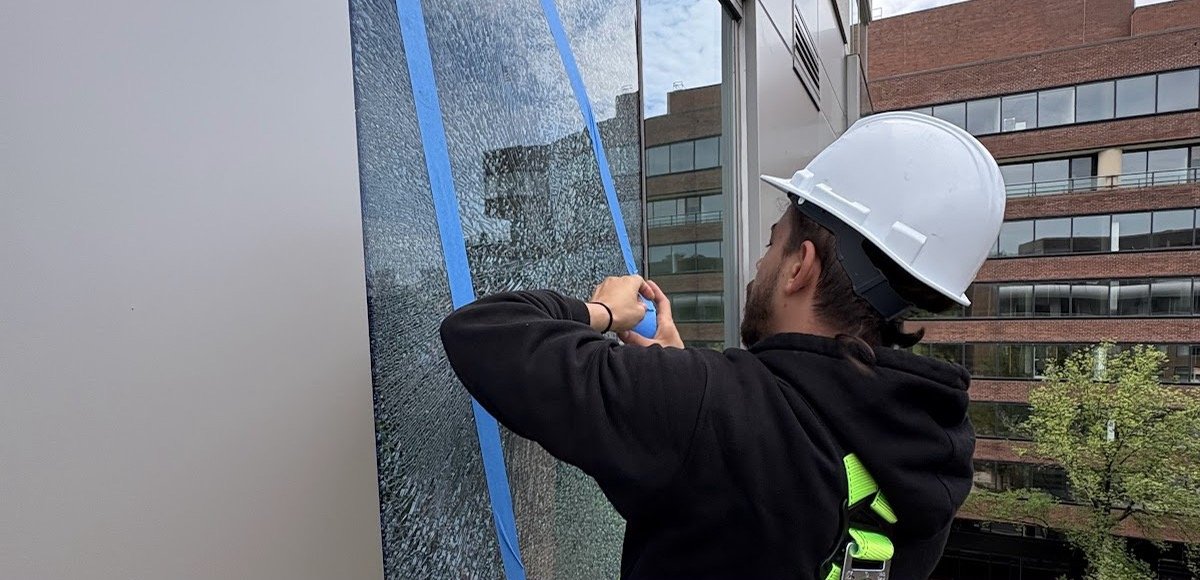
Commercial glass and aluminum are usually made to order. Ask for lead times early, especially for specialty glass, and work backwards from the date you need the opening finished. If existing openings will be exposed before the new glass arrives, decide how they will be protected.
6. Sequence It With Other Trades
Glass usually goes in after the framing or structural openings are ready and before the finishes around them. Confirm who prepares the opening, who seals the perimeter and who protects the glass once it is in. On a fit-out, a short call between the general contractor and the glazier can prevent a lot of rework.
7. Confirm Permits and Approvals
Whether a permit or design review applies depends on the work and the location. Historic districts, changes to a building front and landlord rules can all come into play. Decide who is responsible for each approval before work starts, and check with the local authority or your design professional if you are not sure.
8. Agree How the Job Will Be Handed Over
- Who inspects the finished work, and when?
- How will any scratches or defects be recorded and resolved?
- Who receives care instructions and product details?
- Who cleans the glass and removes the protection?
What to Send for an Estimate
A useful first request includes the address, drawings or photos, approximate sizes, glass requirements if known, your timeline and a contact for site access. Related services: commercial window installation, aluminum storefront installation and storefront door installation.
Prestine Glass Solutions works with owners and contractors across Washington DC, Virginia and Maryland. See our commercial glass contractor page or send your project details. Call 571-621-0898 or send us the details online.