
A commercial entrance opens and closes thousands of times, and small problems tend to show up slowly. The door starts closing a little too fast, or it needs an extra push to latch, and one morning it will not lock at all. The cause is usually one of a handful of parts. Knowing the symptoms helps you describe the problem and judge whether the fix is a small repair or something bigger.
The Door Slams or Closes Too Fast
This almost always points to the closer, the device that controls how the door swings shut. Closers have adjustments for speed, and they can drift out of setting. If the door has become hard to control, or you can see oil on the closer or the floor beneath it, the closer has probably failed and needs replacing rather than adjusting. See door closer repair and replacement for what that involves.
The Door Will Not Close All the Way
A door that stops an inch short may have a closer that is too weak for the door or set too slowly. Wind and air pressure can cause the same thing, especially on tall entrances and buildings where air moves through the lobby. Check for anything simple first, such as a mat or debris at the threshold, and look at whether it happens all the time or only on windy days.
The Door Drags, Sags or Rubs
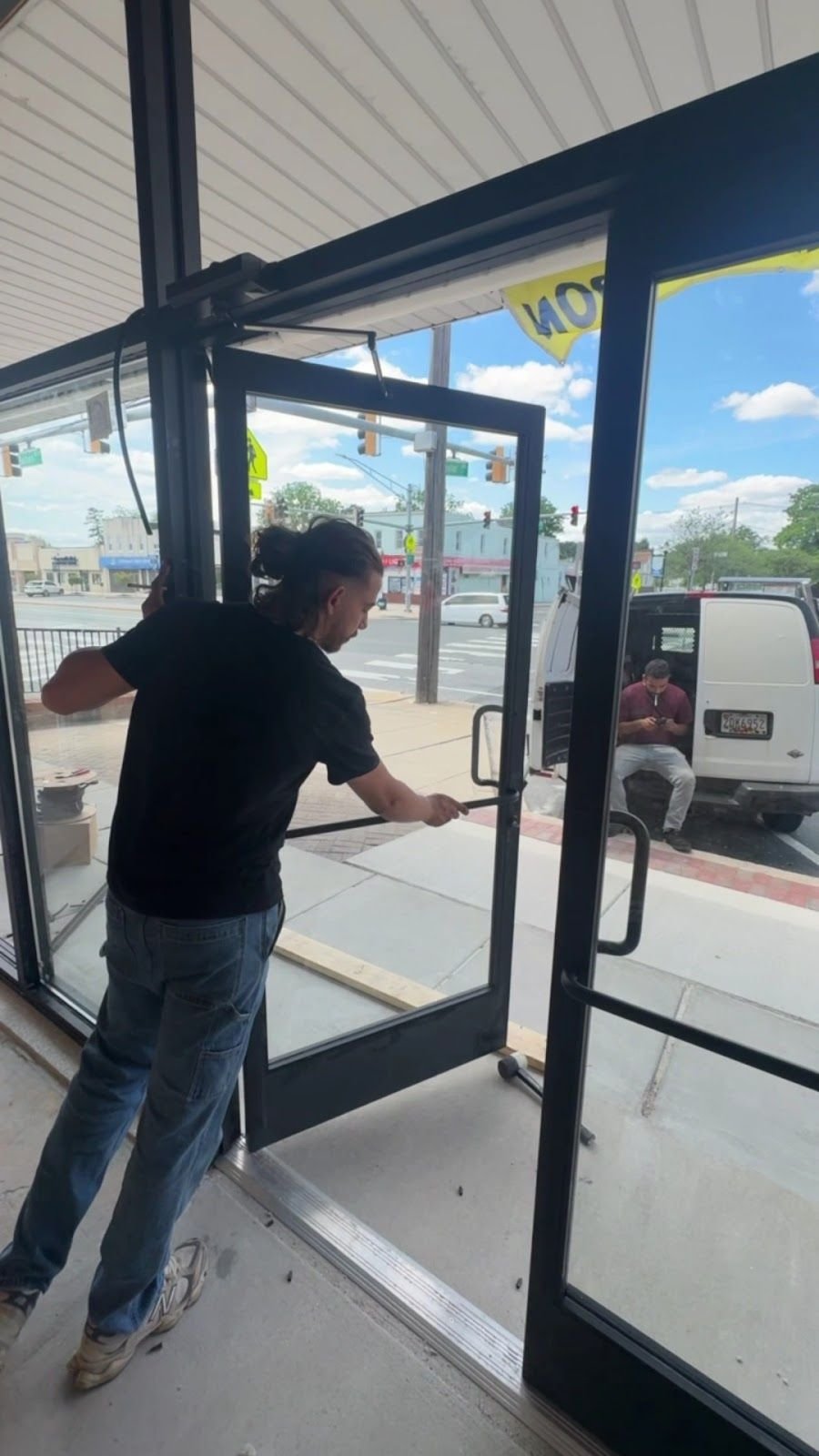
If the door scrapes the threshold or rubs the frame, the problem is usually at the top or bottom pivot, or at the hinges. Aluminum storefront doors carry their weight on these points, and they wear with use. You may see a gap that is wider at the top on one side, or marks where the door has been rubbing. Worn pivots and hinges can often be replaced without changing the door. More on hinge and pivot repair.
The Lock Does Not Line Up
When staff need to lift or push the door to turn the key, the lock is often fine and the door has moved. Sagging from worn pivots, a shifted frame or loose hardware will all pull the bolt out of line with its strike. Fixing the alignment first usually solves it. Replacing the lock without doing so tends to bring the same problem back.
The Corners or Frame Are Damaged
Look at the corners of the door itself. On aluminum doors, the joints can pull apart with years of use or after an impact, and the door starts to go out of square. A bent frame creates similar symptoms. Damage like this affects how every other part works, and it is often the point where door replacement or frame replacement becomes the better option.
Quick Checks You Can Do Yourself
- Open the door halfway and let go. Does it close smoothly, or does it jerk or speed up?
- Look for oil on or under the closer.
- Check the gap around the door. Is it even on all sides?
- Lift gently on the handle. Does the door shift at the top or bottom?
- Note whether the problem changes with the wind or the time of day.
- Take a photo of the closer, the top and bottom of the door and the lock.
Leave the adjustments alone if you are not sure, and never remove a closer yourself. The arm and spring are under tension. If your door is part of a fire-rated opening or an accessible route, ask the building manager about any requirements before parts are changed.
Repair or Replace?
Most of these problems are repairs. It starts to make sense to look at replacement when several parts have failed at once, when the door itself is bent, or when the same repair keeps coming back. Our guide on what affects storefront door replacement cost goes through that decision.
Prestine Glass Solutions repairs commercial doors across Washington DC, Virginia and Maryland. Tell us what the door is doing and send a photo or two. Call 571-621-0898 or send us the details online.